Posts

Showing posts with the label Books

More Loomis

Image
Andrew Loomis' 1947 instruction book Creative Illustration has been reprinted .  One in a series of instruction books by Loomis, a Chicago-based commercial illustrator of the 20th century, this book might be described as his magnum opus.  It's the first of his books to deal with colour and composition. Sections include line, tone, colour, and creating ideas.  It is by far the thickest of Loomis's books and before this reprinting, copies sold for over $100. Titan Books will reprint Fun With a Pencil next April, Loomis's most basic how to draw book.  All that will remain, should Titan continue, will be Three Dimensional Drawing , an expanded version of Successful Drawing which they have already reprinted, and The Eye of the Painter and the Elements of Beauty , a book published after Loomis's death.  Used copies of that start at $141.

In Praise of Tony Fucile

Image
Tony Fucile is an animator and visual development artist who has worked on The Little Mermaid , Aladdin , The Lion King , The Iron Giant , The Incredibles , Ratatouille , Up and other films.  He is also an illustrator of children's books, and that's what I'd like to focus on. I first became aware of his art in books in Jack-Jack Attack , a Golden Book that was part of merchandising for The Incredibles .  His drawings are spare, but spare shouldn't be confused with simple.  His characters are solidly constructed and his compositions are nailed down, but everything is delineated with very few lines.  While those lines are somewhat rough, they are very expressive.  Slickness is not high on Fucile's list, but his other qualities are so outstanding that it isn't missed. Fucile both wrote and drew Let's Do Nothing , a story of two boys desperate to come up with a way to fill time.  You can see from this example how strong Fucile's poses are, a result, no dou...

Book Review: When Magoo Flew

Image
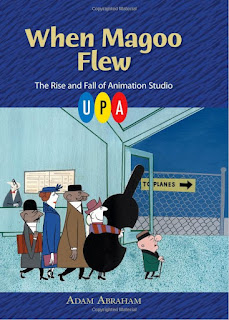
The only way this book could be better is if the artists who worked at UPA were all still alive to be interviewed. Thankfully, many were interviewed before their deaths by animation historians such as John Canemaker, Michael Barrier, Leonard Maltin and Karl Cohen and author Adam Abraham has accessed this information as well as trade publications, studio records, letters, etc. to write the most detailed history of UPA to date. What struck me most while reading this book was how continually precarious UPA's existence was. There were, of course, the early days when finding any work was a life or death situation for the company. However, even when they got a contract to do theatrical shorts for Columbia, the first two contracts were only for two cartoons apiece. Other threats to the studio's existence had to do with the various partners. While some studios were owned by individuals, such as Leon Schesinger, or partnerships such as the Disney brothers or Harman and Ising, UPA s...

Review: The World History of Animation

Image
Last summer, I helped a friend develop a course outline for an animation history course. In looking for a textbook, I found that there wasn't a single volume that seemed appropriate. When The World History of Animation by Stephen Cavalier was later published, I wondered if this book might be the solution. Unfortunately, it isn't. The book is a wide ranging history of animation. It starts with a short historical summary for different parts of the world before launching into a year by year history where particular films are singled out. The entries are wildly uneven, both in terms of the writing and the accompanying illustrations. One would think that the amount of space devoted to a film would be proportional to the film's importance, but there doesn't seem to be any relationship. Not all the films are represented by stills and here, too, the number or size of the stills bears no relation to the importance of the film. I don't think I can articulate the autho...

Another Loomis Reprint

Image
The second volume of the reprinting Andew Loomis's art instruction books is now available. I've seen copies in stores, though Amazon won't release it until Oct. 25. Loomis was a commercial illustrator in the days when mass circulation magazines were full of painted illustrations accompanying fiction. He also authored a series of art instruction books that are still much sought after, even 6 decades after first being published. The books were out of print for years and copies commanded over $100 apiece on used book sites. Titan Books (who are also publishing The Simon and Kirby Library ; the next volume is of their crime comics and due out momentarily) have undertaken to reprint Loomis. This volume follows Figure Drawing for All It's Worth . While art styles have changed since Loomis's day, the fundamentals don't change. Anyone interested in learning to draw will benefit from Loomis's books.

Walt's People Volume 11

Image
You would think that by volume 11 of Walt's People, a series of books composed of interviews with people who worked with and for Walt Disney, that editor Didier Ghez would be down to interviewing the grandson of the janitor who emptied the wastebasket of Milt Kahl's inbetweener. Nothing could be farther from the truth. Editor Ghez continues to come up with interviews of historical importance filled with fascinating anecdotes and production details. The contents of volume 11 are: Foreword: John Canemaker Didier Ghez: Ruthie Tompson Christopher Finch & Linda Rosenkrantz: Walt Pfeiffer John Culhane: Shirley Temple John Culhane: I. Klein Peter Hansen: Basil Reynolds Christopher Finch & Linda Rosenkrantz: Eric Larson John Culhane: John Hubley Robin Allan: Jules Engel Darrell Van Citters: Ed Love Darrell Van Citters: Mike Lah JB Kaufman: Frank Thomas Dave Smith: Carl Nater John Culhane: John Hench John Canemaker: Ward Kimball Dave Smith: Ward Kimball Didier Ghez: Frank Arm...

Jonathan Rosenbaum on Walt Disney and Tex Avery

In early 1975, Film Comment magazine devoted an entire, oversize issue to Hollywood cartoons. It's well worth finding in a library or through an online service, as it contains a comprehensive interview with Chuck Jones as well as an interview with Grim Natwick and articles by Greg Ford and Mark Langer. One piece was an essay on Walt Disney by film critic Jonathan Rosenbaum. Rosenbaum has now posted the first part of that essay on his website with the second part to follow shortly. As Thad has pointed out in the comments, part 2 is now up. And here is Rosenbaum on Tex Avery .

Ward Kimball Biography Coming in 2012

Image
Caricature of Ward Kimball by Walt Kelly Didier Ghez's Disney History site has details of Amid Amidi's biography of Ward Kimball to come out in the latter half of 2012. "The Kimball family has generously granted me access to all of Ward's personal files, photos and diaries, and I've combined this with new research and interviews to present a thorough celebration of his life that acknowledges his impact on the art form." This is a book I very much look forward to reading.

Andrew Loomis Back in Print

Image
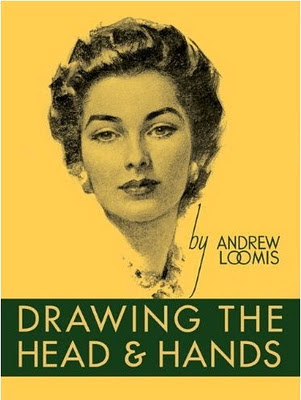
Here's one that snuck up on me, but one I'm grateful for. Titan Books has brought Andrew Loomis's excellent book Figure Drawing For All It's Worth back into print and at a reasonable price. It's $23.49 at Amazon.com and $28.84 at Amazon.ca . Andrew Loomis was a commercial illustrator working out of Chicago, a contemporary of Chicago artists Haddon Sundblom and Gil Elvgren . In addition to his illustration work for what used to be called slick magazines (on slick paper as opposed to the pulp magazines), he also wrote several great books on drawing and painting. The out-of-print books are hard to find and usually very pricey. Titan will be reprinting Drawing the Head and Hands by Loomis in October. They also plan to reprint his Creative Illustration and Fun with a Pencil. I hope they get around to Three Dimensional Drawing , and The Eye of the Painter and the Elements of Beauty . (link via BoingBoing )

100 Animated Feature Films

Image
One of the curious things about this book by Andrew Osmond is the lack of an adjective in the title. It's not the "100 Best," or "100 Ground-breaking," or even "100 Favourite." The lack of an adjective is evident in the films selected. Osmond has decidedly mixed reactions to Happy Feet , yet it is included. The introduction states that, "the selection is shaped by [the author's] taste, as the entries make clear, but I hope it is not wholly capricious." Try as I might, I found it hard to discern a point of view in these entries. I value Osmond's inclusion of films from all parts of the world and look forward to seeing some of the films that I'm not familiar with, but this isn't so much a book as a collection of unrelated essays. The only thing that holds them together is that they add up to 100 and that they are all about animated features. I don't insist on agreeing with an author's point of view, but I value t...

Animation Art Auction

Image
Pinocchio concept art by Gustav Tenggren Milt Kahl thumbnails from The Rescuers Back in the '90s, animation art was all the rage. Sotheby's and Christie's both staged multiple auctions that featured animation art from the 1930s to the present. Animation art is no longer as prominent for a variety of reasons. The current economy doesn't leave people with a lot of extra money to spend but probably more important is the fact that digital films don't generate much art on paper or canvas. The art that is created, being digital, is not one of a kind. It can be copied endlessly with no loss of quality, which destroys the whole concept of owning an original. Profiles in History will be having an auction featuring much animation art on May 14. Even if you're not in a position to buy, you might be interested in a copy of the catalog , which can be downloaded for free. Hans Perk has been talking about some of this art and publishing better reproductions than are i...

Directing Animation

Image
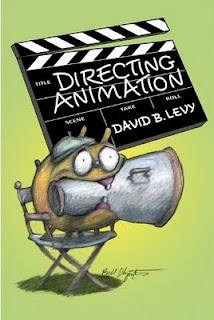
David Levy's books have consistent strengths. His tone is friendly and conversational. He is willing to admit mistakes he's made in his career, which gives him credibility. He interviews a wide selection of other animation professionals, so the books are not limited to Levy's own viewpoint. His greatest strength is his concern for the people side of the animation business. Levy always focuses on behaving professionally, communicating clearly and being organized so as not to sabotage a project or one's own career. All of these strengths are present in his latest book, Directing Animation . It includes chapters on directing indie films, commercials, TV series, features and for the web. Interview subjects include Bill Plympton, Tatiana Rosenthal, Nina Paley, Michael Sporn, PES, Xeth Feinberg, Tom Warburton, Yvette Kaplan and many others. Each of these people relate good and bad experiences they've had directing, giving a rounded view of the job and a host of thi...

Happy Birthday Buster

Image
Today is Buster Keaton's birthday. That's him in old age next to a photo of himself as a child performer in vaudeville. I recently read The Fall of Buster Keaton by Joseph Neibauer, about Keaton's career after he lost his creative independence in 1928. The book is a reasonable survey of his work at Educational, Columbia, MGM and in television, but it needed a stronger editorial hand. Quotes and phrases are repeated and the book often degenerates into summaries of the films. I'm am looking forward to reading Buster Keaton: The Persistence of Comedy by Imogen Sara Smith. The book got a very good review at Greenbriar Picture Shows . It's amazing that 115 years after his birth and more than 80 years after his best work, Keaton continues to fascinate.

The Vault of Walt

Image
Here's a Disney book I'm looking forward to reading. I've known Jim Korkis in print for several decades and have always enjoyed his writing and his passion for animation history. He's the co-author (with John Cawley) of several out-of-print books such as How To Create Animation , Cartoon Confidential and The Encyclopedia of Cartoon Superstars . He has contributed numerous articles to Mouse Planet under the pseudonym Wade Sampson, a name taken to avoid any conflict with his former employment at Walt Disney World (and bonus points to you if you know where the name came from ). The book is over 400 pages of articles concerning Walt Disney, his films, and his theme parks. Many are based on Korkis's own conversations with Disney employees over the years in addition to historical research. For instance, I'm interested to read why the FBI opened a file concerning the original Mickey Mouse Club. Here's a list of the book's contents: Part One: The Walt S...

Two Guys Named Joe

Image
John Canemaker has become one of our leading animation historians for several reasons. As an artist and animator himself, he has an advantage over non-artists such as Bob Thomas or Charles Solomon in understanding the process. As someone immersed in animation history, he is familiar with the field in a way that dabblers like Stefan Kanfer or Neal Gabler never can be. As someone who has personal relationships with many of the people he writes about, he has insights that are not available to authors like Donald Crafton, who write about the remote past. However, all these qualities are trumped by Canemaker's honesty and, perhaps, his courage. Older books on animation tended to be scrubbed clean of studio politics and personal foibles. They were usually content to present chronologies of events and talk of technical and artistic innovations. Canemaker understands that artists are human and so are not wholly admirable and that studios are often battlegrounds where various aestheti...

DreamWorks: The Men Who Would Be King

Image
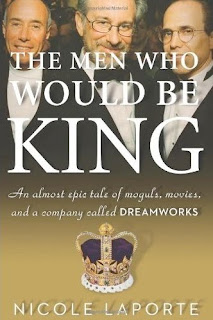
I've read a fair number of business books about the film industry and this is a good one. Author Nicole Laporte does an excellent job of portraying the three partners, Steven Spielberg, Jeffrey Katzenberg and David Geffen, who formed DreamWorks. What's clear from the book is that the company and partnership were always tenuously held together. The partners each had very different personalities and more important than that, very different goals. It's this area where the structural flaws in the company eventually caused problems. Most companies start small and if they're lucky and well-managed, grow larger. The two words that best define DreamWorks are grandiose and hubris. DreamWorks started out large with large expectations and then systematically shrank over time. The expectations of the partners, the investment community and the public were too large and the partners, for all their money and skills, failed to live up to them. Those interested in the animation si...

The Hollywood Economist

Image
( Updated at the bottom.) If you are someone who wonders why movies are the way they are today, this book is essential reading. Edward Jay Epstein ( site and blog ), who has written about the economics of Hollywood for several years in various publications, explains in great detail where the money comes from and where it goes. It is common now for media to report the box office grosses after every weekend, and except for establishing the relative popularity of films currently in release, the information is completely lacking in context. For example, Gone in 60 Seconds cost $103.3 million to make and grossed $242 million. On the face of it, that looks like a success. However, the distributor (Buena Vista) only realized 40% of the world wide box office, amounting to $102.2 million. The rest of the money stayed with the movie theatres. From Buena Vista's gross, they deducted $67.4 million for advertising, $13 million for prints, and $10.2 million for insurance and other expen...

Mindy Aloff Interview

Image
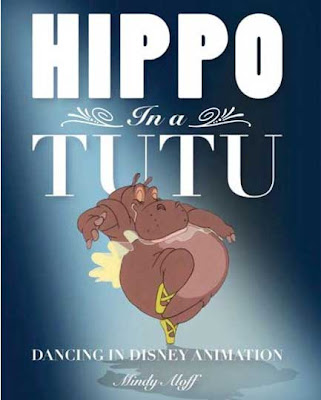
Mindy Aloff, author of Hippo in a Tutu , is interviewed by Kent Worcester of The Comics Journal . "Both animation and theatrical dancing are labor-intensive activities that benefit from a benevolent visionary at the helm. Animation today could learn much from what Walt Disney arranged for his staff to do: to visit the ballet and sketch the dancers. And dancing could benefit from Disney’s appreciation of melodic, song-based music with a clear pulse as a floor for dancing. Unfortunately, the simple pleasures of dancing that asks the performer to use a comprehensible vocabulary of steps and expressive gestures, which relate moment by moment to music, are exactly what most students of both animation and choreography want to evade now. Balanchine, in fact, once wrote about how dancing could learn about the elaboration of fantasy from cartoons. Artists globally, though, don’t want what these historical animated films are equipped to teach – joy as the text and complication as the subte...

A Revised Survival Kit

Image
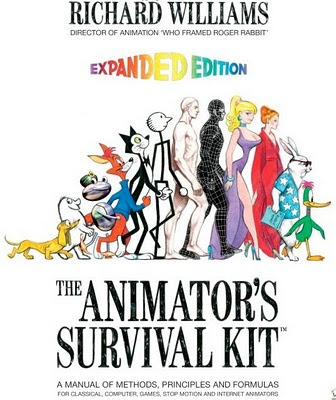
I got an email from Amazon, informing me that there is now an expanded edition of The Animator's Survival Kit by Richard Williams. The cover is above and the contents for the additional material are below. If anyone has a copy of the revised edition, please leave your thoughts about the new material in the comments.

The Archive Series: Animation

Image
This book , the second in the archive series after Story , is a collection of animation drawings from the entire history of the Disney animation studio. Except for the introduction by John Lasseter, there is no text to speak of in the book beyond the captions identifying the drawings, which are the real stars of this book. A book like this is at once both a revelation and a frustration. The revelation has to do with the craft and beauty of the drawings. Animation drawings generally have more life than the image that results from them on screen. The evidence of the human hand is all over them, where that evidence tends to get lost by the time the drawings are pushed through the production pipeline to arrive at the final image. The frustration comes from the drawings that aren't in this book. Every drawing is a reminder of other scenes from the same film that one wishes to see. There is no credited editor, so it's impossible to know how these particular drawings were selecte...